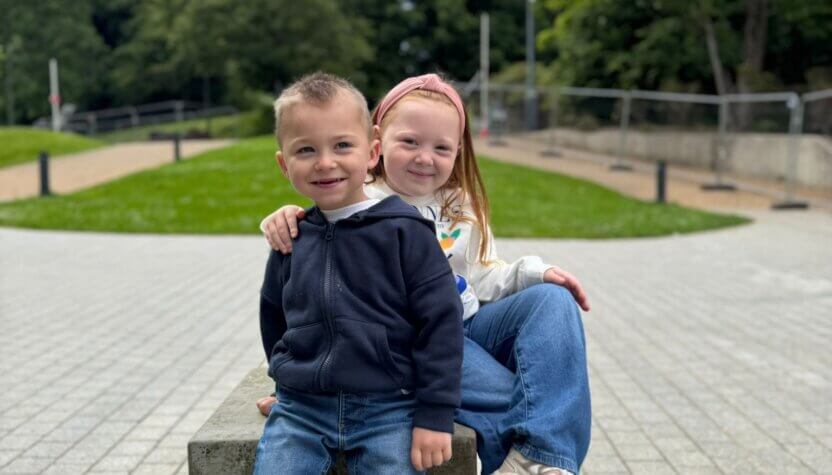
Harry Degiorgio’s first birthday should have been a fun filled day with family, cake, balloons and presents. But instead, Harry woke up on the morning of his birthday in a hospital bed after an hour-long seizure. Worse was to come a few weeks later when little Harry had ten seizures in 72 hours. The fear and unpredictability of these life-threatening seizures left parents Beth and Craig Degiorgio, from Solihull, West Midlands, feeling their family life was lived on a knife edge.
“It felt like we’d get home from hospital and then bang, it would happen again,” Beth, 34, explains. “Those three days of seizures were hell. Harry had been diagnosed with infantile epilepsy months before and started on medication, but we knew something really wasn’t right at all. When we left hospital, we saw at the bottom of the discharge letter ‘query Dravet Syndrome?’ We had never heard of it, and none of the doctors had mentioned it to us. We had to google what it was. Weeks later we all had genetic testing and just had to wait for the results.”
It was when Harry was just four months old that he had what doctors said was a febrile convulsion, after a routine vaccination. At hospital, a consultant reassured the family, but also advised them if Harry did have another one, they should film it.
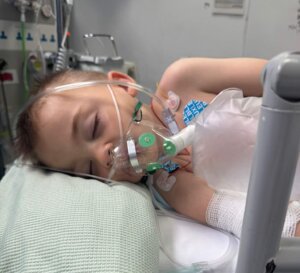 Harry had two more seizures over the next few months and Beth filmed those, which provided doctors with a clear record of the type of seizures. Tests and an MRI followed, and Harry was given medication to control infantile epilepsy, plus rescue medication.
“It was terrifying and traumatic, but we were of the belief that he would grow out it, and we’d deal with it,” Beth, who is also Mum to Tilly, now seven, recalls. “The summer of 2022 Harry had no seizures, but he wasn’t quite where he needed to be developmentally. His balance wasn’t great, and he would fall backwards to one side when sitting up. Then in the Autumn, Harry turned one and we were in and out of Birmingham Children’s Hospital. Then followed a bad Christmas and New Year with seizures.
“I describe the seizures as a monster that followed us around. We’d think ‘should we go to that place or event?’ Are we doing something that will be a trigger for seizures? You are constantly playing a worst-case scenario in your mind. Every seizure had been induced by a virus, but our daughter Tilly was in nursery and going on playdates, so that was hard. We wanted to make sure she had a normal childhood too. Tiredness was also a trigger for seizures and Harry didn’t sleep.”
The diagnosis came in January 2023 in a phone call to Beth’s office.
Beth recalls: “The consultant told me the genetic tests were positive for Dravet Syndrome. We were offered a follow-up appointment with Harry’s consultant and epilepsy nurse. In that moment, standing outside my office, my world fell apart. It was in his DNA. I don’t remember the rest of the phone call. I walked back into the office and I broke down. At home I was sobbing. You go into shock. Life had changed forever.”
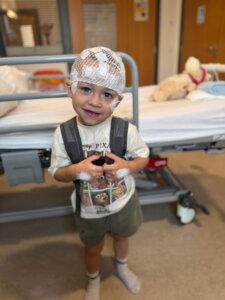 Dravet Syndrome is a life-limiting genetic condition, caused by a change in the SCN1A gene. Harry’s alteration is ‘de novo’, meaning it was not inherited. Symptoms include seizures and a range of comorbidities, including severe sleep disorder, which Harry also has. It affects one in 15,000 babies born in the UK. There is no cure, and the epileptic seizures are extremely hard to treat as the Degiorgio family discovered.
Beth explains: “The medications stopped working. We entered a Dravet world of many hospital appointments. We watched our child start to walk, learn a new skill and then lose it again after a seizure. One was so bad he had to be resuscitated. One in five children with Dravet won’t make it to adulthood. It is a life-changing, horrible condition.
Beth continues: “Harry spent his second birthday having a seizure and the paramedics came out. We’d got to a point where Harry was having up to four seizures a week and two hospital stays a month. We were beyond lucky with our family support – and we trained them in using rescue medications – but as parents, you’re not mentally prepared for it. You try to balance work and normal life and feel guilt and shame if it happens when you’re not with your child.
“It affects every aspect of our lives, both of us as parents were experiencing trauma but in different ways, I was mainly heading up Harry’s medical care and dealing with that which was demanding and stressful, however Craig was having to go to work, knowing he had to miss appointments and being in hospital with Harry, to ensure he was earning money to keep us afloat which takes its toll on him. On top of that we are both sleep deprived and having to watch our child suffer so much with the seizures and that takes a big toll on your relationship.
“You face all the ups and downs of it and that’s counterbalanced by an amazing child that you’re caring for. I wasn’t sleeping – melatonin helped Harry get to sleep, but he would wake up in the night and wake us up. At this point, I felt I wasn’t coping very well. I was anxiety ridden. It is a big step to accept you need help.”
Beth’s GP offered anti-depressants and when Beth refused them, she was contacted by a counsellor who she spoke with for around half an hour, explaining Harry’s condition. The counsellor then sent Beth links to YouTube videos on cognitive behaviour therapy techniques and offered no further sessions.
 “That was all the NHS offered,” Beth says. “We’d heard of The Sandcastle Trust because we’d been fortunate enough to have a ‘Sandcastle Santa Day’ gifted by them over Christmas 2023. It was a really great day out meeting Santa at Drayton Manor. Special days out are great and to know that day has been gifted to you is amazing. I saw in a newsletter the Trust was providing counselling and I applied.”
In the Summer of 2024, Beth started counselling sessions over Zoom. Through counselling she was given tools which help her cope with everyday challenges, anxieties and fears for the future.
Beth says: “Before the counselling I felt grief, anger, trauma and resentment at the diagnosis and what it was doing to our children, and I know Craig felt guilty that he had to go to work. I felt pressure and didn’t know how we would cope. A genetic condition has an impact on the whole family, the parents, who are already sleep deprived and have to be ready to act in an emergency, and the siblings.
“Counselling helped me deal with those overwhelming feelings and emotions. It helped keep me going. We refer to it as a big purple monster that sits in the corner of the room but now we acknowledge it is there and we just ask it to stay there so we can carry on. Sometimes it will come and wipe us out. Counselling doesn’t magic it better, but it gives you an understanding of how to find a way of living with it, how to focus on the things we can control and way to manage the things we can’t. After six months of sessions, I still had all the trauma and responsibility, but I had coping mechanisms.
“Now I can find the hope, see the small milestones and appreciate them and see how fortunate we are. I am so grateful to The Sandcastle Trust for the counselling sessions.”
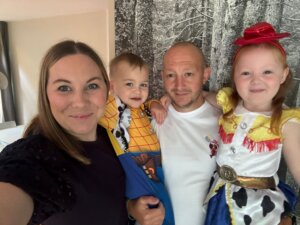 Harry is now four years old and reached a huge milestone in starting nursery a few mornings a week, building up gradually before Reception class, where they hope he will have a one-to-one assistant. Beth admits she has days where, “the cloud is big and heavy” but with the skills she’s learnt during counselling she recognises negative feelings and works them through.
“We are now in a really good space,” says Beth. “We celebrate the wins. Harry has had 100 days without big seizures. He’s making friends at nursery, he loves any ball games, and he is so loving. He is incredible and he’s made us better parents and people.”